Twice in living memory a single person’s judgment stood between the world and nuclear war. Today 3.6 million pounds of spent nuclear fuel sit on the Southern California coast with nowhere to go. This site sets out what the evidence shows on both, with every claim tied to a source you can check yourself.
Nuclear waste, power, weapons and San Onofre, updated daily
Each day we gather the most important verified news on nuclear issues. Every item is checked against the first question of the Four‑Way Test, is it the truth?, summarized neutrally, and linked to its original source so you can read it yourself.
Loading today’s brief…
Summaries are written for this site; follow each link for the full story. Spotted an error? Tell us and we will correct it.
4×
Is it the truth?
The standard behind this site
“Truth, it turns out, is not just a moral value. It is infrastructure as essential as energy, data, and capital.”
In January 2026, at Palace Schatzalp during the World Economic Forum in Davos, Steve Bender, Chairman of the United States Green Chamber of Commerce, asked a room of global leaders one question: Is it the truth? The WEF’s own Global Risks Report ranks misinformation and disinformation among the most severe threats facing the world. When people no longer know what to trust, they stop trusting everything.
Few subjects carry more myths than nuclear weapons, nuclear power and nuclear waste. Fear and hype both spread faster than facts. So this site follows one rule: we don’t promote opinions, we share the truth. Where the evidence is settled, we say so. Where informed people disagree, we show the evidence on each side and tell you who is making each claim.
The Four‑Way Test
Rotary’s Four‑Way Test was written during the Great Depression by business leaders trying to restore confidence in commerce. Every page here is held to it.
1Is it the truth?
Every figure is sourced to a scientific body, government record, court filing or reputable news report.
2Is it fair to all concerned?
Concerns and official responses appear side by side, each attributed to the people who make them.
3Will it build goodwill and better friendships?
We name the groups doing the work, across viewpoints, so readers can connect with them directly.
4Will it be beneficial to all concerned?
Clear facts help families, voters, businesses and leaders make better decisions about risks that affect everyone.
“The laws of physics do not negotiate. Data does not vote. Reality does not respond to ideology.”
239Pu
Nuclear war
We were minutes away. Not history, a warning.
The Peace Stage at the Environmental Xperience
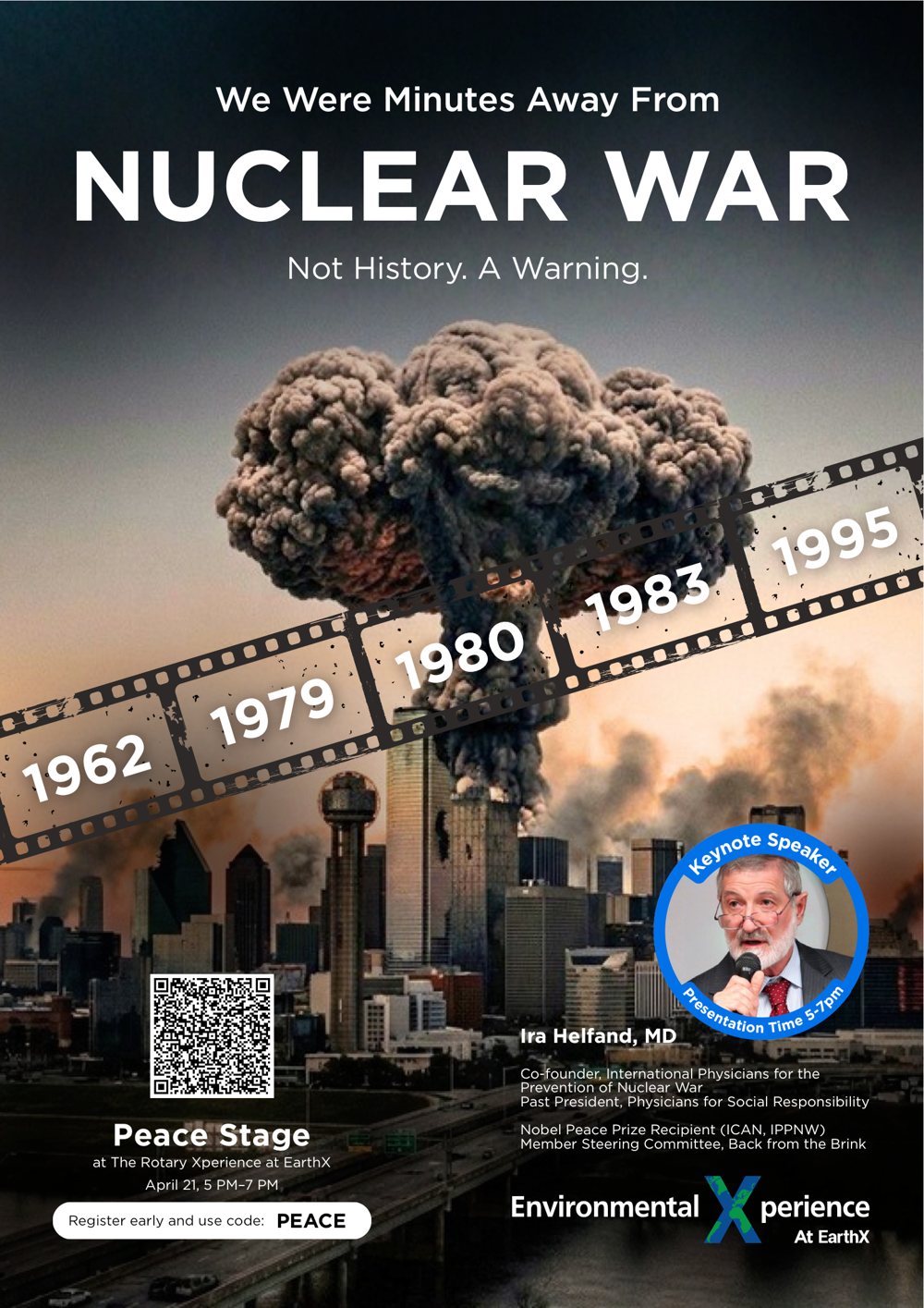
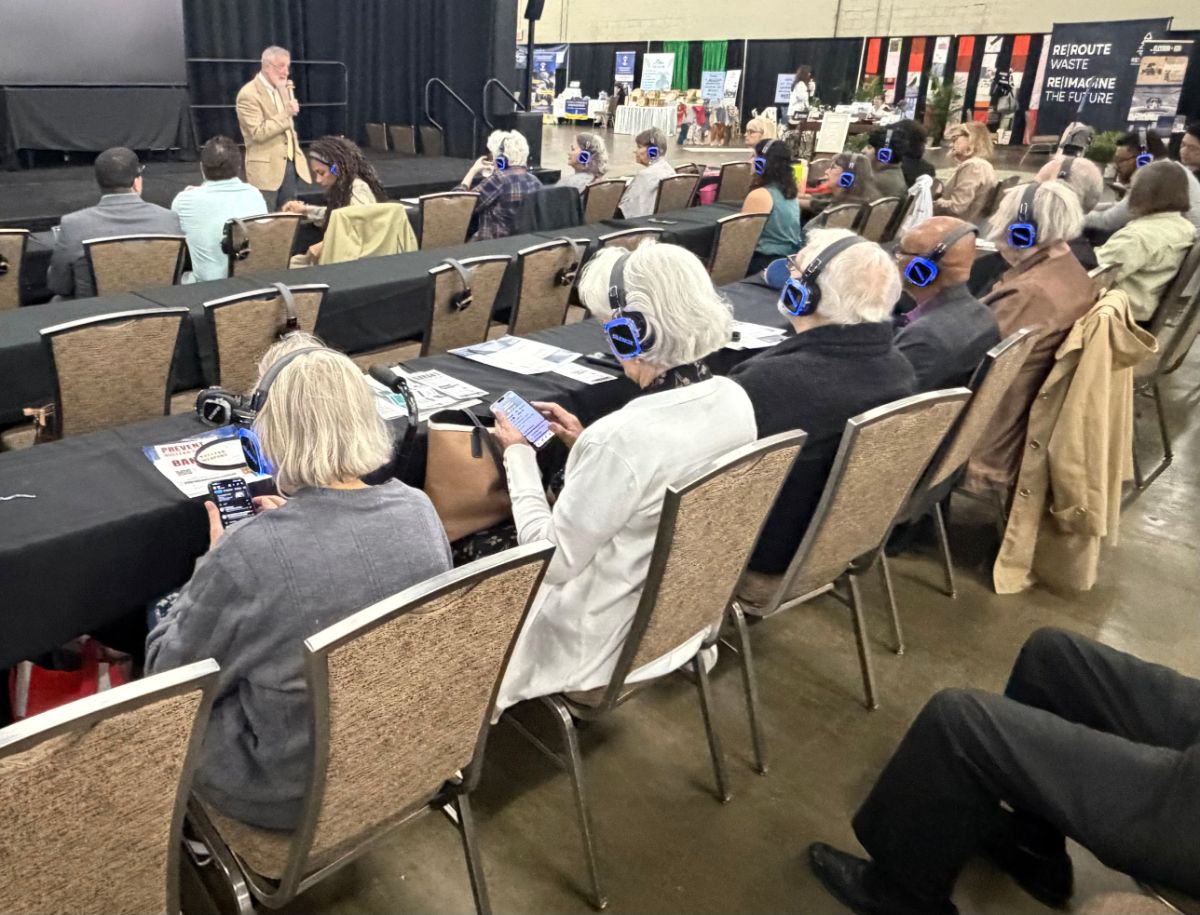
On April 21, 2026, the Peace Stage at The Rotary Xperience, part of the Environmental Xperience at EarthX in Dallas, presented We Were Minutes Away From Nuclear War. The program asked a simple question: what do the years 1962, 1979, 1980, 1983 and 1995 have in common? Each marks a moment when the world came close to nuclear catastrophe, not through a decision to go to war, but through miscalculation, technical failure or a split‑second human choice.
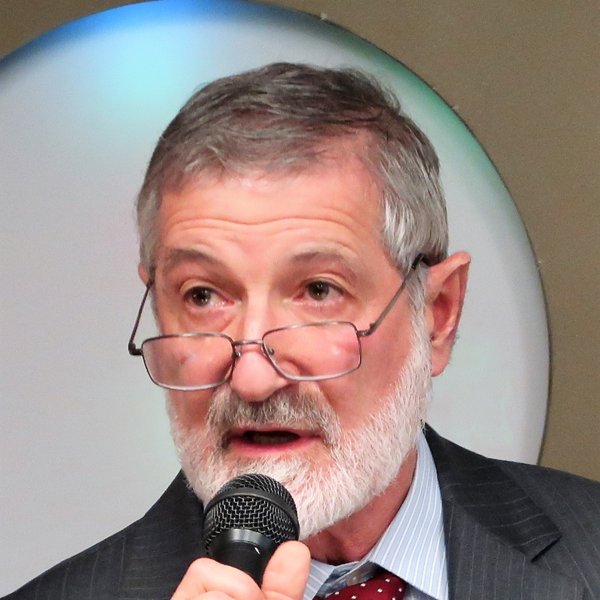
Dr. Ira Helfand gave the keynote presentation from 5 to 7 PM. Thanks to community sponsors, free admission was offered with the code PEACE.
Program partners
Physicians for Social Responsibility
Dallas Peace and Justice Center
League of Women Voters
Dallas Pax Christi
First Unitarian Social Concerns Committee
Keynote speaker
Ira Helfand, MD
Dr. Helfand has spent more than four decades explaining what nuclear war would do to the human body and to the planet. He is a leader in two organizations awarded the Nobel Peace Prize: he serves on the International Steering Group of the International Campaign to Abolish Nuclear Weapons (ICAN, Nobel Peace Prize 2017) and is past president of International Physicians for the Prevention of Nuclear War (IPPNW, Nobel Peace Prize 1985). He is co‑founder and past president of Physicians for Social Responsibility, IPPNW’s US affiliate, and a member of the Steering Committee of the Back from the Brink coalition.
He trained at Harvard College and the Albert Einstein College of Medicine, chaired the Department of Emergency Medicine at Cooley Dickinson Hospital in Massachusetts, and practiced as an internist and urgent care physician in Springfield, Massachusetts, until 2021.
His work
Nuclear Famine
His reports for IPPNW and PSR applied climate research to the world’s food supply. The 2012 edition estimated that a limited war using about 100 weapons could put one billion people at risk of starvation. The 2013 second edition, Nuclear Famine: Two Billion People at Risk?, raised that estimate to more than two billion.
At the United Nations
He addressed a special session of the UN General Assembly in 2015, chaired the 2016 session on humanitarian consequences that led to the Treaty on the Prohibition of Nuclear Weapons, and represented IPPNW when the treaty opened for signature in September 2017.
In medical journals
He has published on the medical effects of nuclear war in the New England Journal of Medicine, The Lancet, the BMJ and the World Medical Journal, and co‑wrote a 2023 editorial published in more than 100 health journals calling on health professionals to help reduce the risk of nuclear war.
Recognition
His honors include the 2023 Gandhi King Ikeda Community Builder’s Award from the Martin Luther King Jr. International Chapel at Morehouse College and the 2017 Edward Barsky Award of the American Public Health Association.
The close calls
These are documented events. In each, false data or a tense standoff brought leaders close to launching nuclear weapons.
1962
Cuban Missile Crisis. US ships dropped practice depth charges on the Soviet submarine B‑59, which carried a nuclear torpedo. Officer Vasili Arkhipov refused to approve its launch.
1979
NORAD training tape. On November 9, a war‑game tape loaded into a US warning computer showed a massive Soviet attack. Interceptor jets took off before the error was found.
1980
A 46‑cent computer chip. On June 3, a failed chip produced false warnings of incoming Soviet missiles. Bomber crews started their engines.
1983
Petrov and Able Archer. On September 26, Soviet officer Stanislav Petrov judged a satellite warning of US missiles to be false; it was sunlight reflecting off clouds. In November, Soviet leaders feared a NATO exercise, Able Archer 83, was cover for a real attack.
1995
Norwegian rocket. On January 25, Russian radar mistook a Norwegian‑US science rocket for a possible missile, and President Yeltsin’s nuclear briefcase was activated.
Back from the Brink: five policy solutions
Dr. Helfand helps lead this US coalition, which calls on the United States to lead a global effort to prevent nuclear war.
Pursue a verifiable agreement among nuclear‑armed states to eliminate their arsenals.
Renounce the option of using nuclear weapons first.
Take US nuclear weapons off hair‑trigger alert.
End the president’s sole authority to launch a nuclear attack.
Cancel the plan to replace the entire arsenal with enhanced weapons, estimated at about $1.7 trillion.
Connect with Dr. Helfand’s organizations
To invite a speaker, join a local group, or support this work, contact the organizations directly.
Back from the BrinkUS coalition to prevent nuclear war. Local hubs across the country.our contact form
Physicians for Social ResponsibilityUS health professionals working on nuclear weapons and climate. Local chapters, including Los Angeles and Texas.our contact form
A nuclear weapon releases energy from fission, or from fission plus fusion, in a fraction of a second. Weapons are measured in kilotons or megatons: the equivalent of thousands or millions of tons of TNT. Only two have been used in war, by the United States against Japan in August 1945.
~15 kt
Hiroshima, Aug 6, 1945. About 90,000 to 166,000 people died by the end of 1945.
~21 kt
Nagasaki, Aug 9, 1945. About 60,000 to 80,000 people died by the end of 1945.
2,000+
nuclear tests conducted worldwide since 1945, most during the Cold War.
~70,000
warheads at the 1986 peak. Today’s total is about 12,200.
Estimated nuclear warheads by country, January 2025Total inventory, including deployed, stored and retired warheads awaiting dismantlement. Linear scale.
Source: SIPRI Yearbook 2025 and Federation of American Scientists. All figures are estimates; no country publishes full data except partially the US, UK and France.
Effects of a nuclear explosion
Blast
A pressure wave that destroys buildings. Most deaths in Hiroshima and Nagasaki came from blast and fire.
Heat
A flash of thermal radiation that causes burns and fires kilometers away.
Initial radiation
Gamma rays and neutrons released in the first minute, dangerous near the blast.
Fallout
Radioactive debris carried by wind, worst after explosions at ground level.
Key treaties
1963
Partial Test Ban Treaty ended atmospheric testing by its parties, cutting global fallout.
1970
Non‑Proliferation Treaty (NPT) in force. 191 states. Non‑weapon states agree not to build them; weapon states commit to pursue disarmament; all may use peaceful nuclear energy under IAEA inspection.
1993
Megatons to Megawatts began. Over 20 years, uranium from about 20,000 dismantled Russian warheads was diluted into US reactor fuel, generating roughly 10% of US electricity for years.
1996
Comprehensive Test Ban Treaty signed; not yet in force because key states have not ratified it.
2021
Treaty on the Prohibition of Nuclear Weapons in force. No nuclear‑armed state has joined.
2026
New START, the last treaty limiting US and Russian deployed strategic warheads (1,550 each), reached its expiration date in February 2026. Check current sources for its status.
Settled
Nine countries hold nuclear weapons. Russia and the United States hold close to 90% of them.
Global stockpiles fell by more than 80% from the Cold War peak, though the number of deployed warheads is now rising slowly, and China’s arsenal is growing fastest.
Power reactor fuel is not weapons material. Making a weapon requires either highly enriched uranium or separated plutonium, which is why enrichment and reprocessing are tightly watched.
Debated
Deterrence. Whether nuclear weapons helped prevent war between great powers since 1945, or whether the world was partly lucky through near misses like the 1962 Cuban Missile Crisis.
Nuclear winter. Climate models suggest smoke from burning cities could cool the planet and cut food production. Scientists disagree on how severe the effect would be for different sizes of war.
The 1945 bombings. Historians still debate whether they were necessary to end the war.
Arguments for keeping arsenals
Deterrence discourages large‑scale attack.
Extended deterrence reassures allies who might otherwise build their own.
Disarmament is hard to verify while rivals stay armed.
Arguments for disarmament
Any use could kill millions and harm the global climate.
Accidents, miscalculation and false alarms have nearly caused launches.
The NPT commits weapon states to work toward elimination.
Before Davos, there was Dallas. At EarthX 2025, the Sea 2 Sky Solutions Myth‑Busting Conference asked three questions about the environmental myths that shape public opinion: Who funds them? Why do they exist? How can we search for the truth? Steve Bender moderated the program in a strictly nonpartisan way. Myths about electric cars, wind power and climate science were all on the table, and so was nuclear power.
Two of the most prominent voices on nuclear energy took the stage that afternoon, with support from Bart Ziegler and the Samuel Lawrence Foundation. The ideas tested in that room grew into the Is It the Truth? message Steve carried to the World Economic Forum nine months later.
Panel: nuclear dangers and myths
Dr. Gregory Jaczko
Chairman of the US Nuclear Regulatory Commission, 2009 to 2012 · PhD in physics, University of Wisconsin–Madison
Jaczko served on the NRC from 2005 and led the agency through the US response to the 2011 Fukushima disaster. That experience turned him into one of the country’s best‑known critics of nuclear power, a story he tells in his book Confessions of a Rogue Nuclear Regulator (Simon & Schuster, 2019). He knows San Onofre well: in 2019 he co‑led Rep. Mike Levin’s task force on how to safely store and move the plant’s spent fuel. He also founded the wind developer Wind Future and has taught at Princeton and Georgetown.
Since EarthX
May 2025: When new executive orders moved to speed nuclear licensing, he warned they would mean “more nuclear accidents, and less nuclear safety.”
2026: Directs Princeton’s Scholars in the Nation’s Service Initiative while working in renewable energy.
June 2026: Still unconvinced on new designs: “I haven’t seen anything to change my mind that it’s just not a viable technology.”
Professor of Civil and Environmental Engineering, Stanford University · Director, Atmosphere/Energy Program
Jacobson’s research team has drawn up plans for 145 countries and all 50 US states to run on 100% wind, water and solar power, with storage. He argues that new nuclear plants are an “opportunity cost”: by his estimate they take 10 to 19 years from planning to operation, they cost more than renewables, and carry risks of weapons proliferation, meltdown and long‑lived waste. His earlier book, No Miracles Needed, came out from Cambridge University Press in 2023, and he held a book signing right after his EarthX panel.
Since EarthX
January 2026: Published Still No Miracles Needed: How Today’s Technology Can Save Our Climate and Clean Our Air (Cambridge University Press), with a foreword by Bill McKibben.
2026: Co‑authored a PNAS study finding that “repowering” aging US wind farms could roughly double onshore wind capacity, from 153 to about 314 gigawatts.
2026: Tracks California’s grid, where wind, water and solar supplied more than 56% of demand this year.
Both speakers are critics of nuclear power, and their views are their own. Other respected scientists disagree. Climate scientist James Hansen, for example, has called the opportunity‑cost argument against nuclear “dubious” and argues nuclear power is needed to cut emissions fast enough.
The evidence on safety, emissions, cost and waste is laid out in the Nuclear power and Nuclear waste sections, so you can weigh the arguments yourself.
We are deeply grateful to EarthX for its commitment to open, honest dialogue on the energy choices facing our planet. In 2025, EarthX hosted our Mythbusting conference on nuclear energy, bringing together two of the most respected voices in the field: Dr. Gregory Jaczko, former Chairman of the U.S. Nuclear Regulatory Commission, and Dr. Mark Z. Jacobson of Stanford University, whose research compares the costs and benefits of nuclear power with renewable energy.
We thank Trammell S. Crow and EarthX for hosting Dr. Gregory Jaczko and Dr. Mark Z. Jacobson in 2025, and Dr. Ira Helfand’s talk on the danger of nuclear war and the Braver Angels nuclear power debate in 2026. Few gatherings would make room for such hard conversations. EarthX did.
In 2026, EarthX welcomed Dr. Ira Helfand as a keynote speaker at its Environmental Xperience. Dr. Helfand is co-founder of International Physicians for the Prevention of Nuclear War and past president of Physicians for Social Responsibility, and his work is tied to two Nobel Peace Prizes through IPPNW and ICAN.
By giving a platform to speakers on all sides of the nuclear conversation, EarthX trusts its audiences to weigh the evidence and decide for themselves. That is exactly the spirit of nuclear literacy, and we are proud to stand with EarthX as it looks ahead to 2027.
San Onofre Nuclear Generating Station (SONGS) · San Diego County, California
For 44 years, the San Onofre Nuclear Generating Station powered Southern California from a strip of coast between San Clemente and Oceanside, on land leased from the US Navy at Camp Pendleton. It shut down in 2012 after a radioactive leak, and it is now being torn down. Its spent nuclear fuel is not leaving. It is stored on site, beside the ocean, and will stay there until the federal government provides somewhere else for it to go.
3.6M lb
of spent nuclear fuel stored on site.
123
sealed steel canisters: 73 Holtec and 50 Orano NUHOMS.
108 ft
from the storage site to the shoreline.
8.4M
people living within 50 miles (2010 census).
Where the waste sitsSchematic cross‑section, not to scale.
Sources: Public Watchdogs v. SCE case record (108 ft); SCE and Power Engineering (canister counts).
A timeline of San Onofre
1964
The US Navy grants an easement for the plant on Camp Pendleton land. Owners: Southern California Edison (78.21%), San Diego Gas & Electric (20%) and the City of Riverside (1.79%).
1968
Unit 1 begins commercial operation. It runs until 1992.
1983–84
Units 2 and 3 come online, about 1,127 megawatts each. Together they can power about 1.4 million homes.
2009–11
Edison installs new steam generators built by Mitsubishi Heavy Industries, at a cost of $671 million.
2012
On January 31, a tube in a Unit 3 steam generator leaks, releasing a small amount of radioactivity. Inspections find premature wear on more than 3,000 tubes. Both units shut down and never restart.
2013
On June 7, Edison announces the plant will close permanently.
2014
A settlement puts the cost of the early closure at $4.7 billion, with about $3.3 billion paid by ratepayers. Emails later reveal a private 2013 meeting in Warsaw between the head of the California Public Utilities Commission and Edison executives. The commission fines Edison $16.7 million in 2016, and a revised 2018 settlement saves ratepayers about $775 million.
2015
The California Coastal Commission approves the Holtec storage site with a permit running to about 2035. The NRC exempts San Onofre from offsite emergency planning, finding that with the reactors shut down, a release from stored fuel would not exceed EPA protective guidelines at the site boundary.
2017
An arbitration panel awards Edison $125 million from Mitsubishi, far less than the $7.6 billion sought. In a lawsuit settlement with Citizens Oversight, Edison agrees to spend $4 million on experts to plan moving the fuel.
2018
On August 3, a 100,000‑pound canister of spent fuel catches on a ring and hangs about 18 feet above the bottom of its storage vault for nearly an hour. The Nuclear Regulatory Commission fines Edison $116,000.
2020
The last of the fuel moves from cooling pools into dry storage in August.
2025
The Supreme Court upholds a license for an interim storage site in Texas. Holtec cancels its planned New Mexico site after state opposition. In December, Irvine votes 4 to 3 to join the push to move the waste, and the San Diego County Board of Supervisors votes 5 to 0 to explore options including reprocessing.
2026
The Department of Energy launches “Nuclear Lifecycle Innovation Campuses,” asking states to host storage, recycling and disposal; Idaho, Louisiana, Oklahoma, Tennessee and Utah sign on in July, and Edison reports talks with Utah and Tennessee. West Virginia withdraws in September. Demolition at San Onofre continues: 52 of 66 structures removed by June. The two containment domes are expected to come down in 2027. Edison projects completion by the end of 2028; a state fact sheet says about 2030.
The dangers people raise
The ocean. The storage site sits about 108 feet from the shoreline, exposed to salt air and future sea‑level rise.
Earthquakes. The Newport‑Inglewood/Rose Canyon fault zone runs offshore, and the Cristianitos fault is nearby.
Corrosion. Salt air can cause chloride‑induced stress corrosion cracking in stainless steel. The Holtec canisters have walls 5/8 of an inch thick.
Inspection and repair. Critics, including San Onofre Safety, argue the sealed canisters cannot be fully inspected for cracks or repaired, and call for thick‑walled casks instead.
Handling incidents. The 2018 near‑drop, and scratches found on canisters as they were lowered into place, raised questions about how the fuel was loaded.
No way out. There is no federal disposal site, no operating interim site that accepts the fuel, and the coastal permits run only to about 2035.
People. About 8.4 million people live within 50 miles, along with Interstate 5 and the main coastal rail line.
What Edison and regulators say
The storage systems are licensed by the Nuclear Regulatory Commission and designed for earthquakes and tsunamis.
An NRC‑approved aging management program reinspects canisters every five years. Inspections to date have found no degradation, and a repair method (cold spray) has been identified.
Edison’s corrosion consultant says conditions for cracking are unlikely to develop for decades. The NRC reviewed the scratching and found no credible current threat.
Moving the fuel is the federal government’s legal responsibility. Edison supports moving it off site as soon as a destination exists.
What happens next
Under federal law, the US Department of Energy is responsible for taking spent fuel from power plants, but no national repository exists. The department is pursuing a “consent‑based” search for communities willing to host storage. Until one opens and transport begins, San Onofre’s fuel stays where it is. Local leaders, including Rep. Mike Levin and a growing number of Orange County and San Diego County cities, are pushing to move it sooner. The Coastal Commission’s permits require the storage to be reviewed again around 2035, including its exposure to coastal hazards.
Based in Del Mar, the Samuel Lawrence Foundation has made the waste at San Onofre its flagship cause. Its San Onofre and Beyond program brings together scientists, policymakers and more than 20 partner groups to push for safer storage and a way to move the waste off the beach. With a coalition of other organizations, it calls for three steps:
Inspect. A full, independent inspection of every canister using modern non‑destructive testing.
Repackage. Move the waste, where needed, into canisters designed for long‑term containment.
Relocate. Move it to higher ground or to federally approved interim storage until a permanent repository exists.
On August 20, 2026, the foundation hosted A San Onofre Symposium: Nuclear Waste to Clean Energy at the Scripps Seaside Forum in La Jolla. Speakers included Rep. Mike Levin, former NRC chair Gregory Jaczko, Scripps geoscientist James Day, Harvard public health researcher Yazan Alwadi, and Tim Kowalchik of Utah’s Office of Energy Development.
President of the Samuel Lawrence Foundation. Thank you, Bart, for your passion and your endless energy in pushing to get San Onofre’s nuclear waste off the beach and toward a safer solution, and for helping so many people in Southern California understand what is at stake.
Who is working on San Onofre
Groups across Southern California and beyond are pushing to move the waste, educating the public, or offering a different view. Official bodies hold public meetings where anyone can comment. Next public meeting: the SONGS Community Engagement Panel meets November 5, 2026, at 5:30 PM, with an update on dismantlement.
Local advocacy and watchdog groups
San Diego · advocacy, litigationPublic WatchdogsHas challenged decommissioning and canister safety in court and runs a whistleblower program.
Del Mar · advocacy, educationSamuel Lawrence FoundationLed by President Bart Ziegler, PhD. Its San Onofre and Beyond program calls for inspecting, repackaging and moving the waste to higher ground. Hosted the August 2026 San Onofre Symposium at Scripps.
El Cajon · litigation, advocacyCitizens OversightIts 2017 settlement required Edison to plan to relocate the waste. Promotes moving it inland on Camp Pendleton.
San Clemente · grassrootsSan Clemente GreenSeeks state action to move the waste to higher ground. Produced the documentary SOS: The San Onofre Syndrome.
San Diego · peace educationPeace Resource Center of San DiegoEducation on nuclear weapons and energy; a past member of the Coalition to Decommission San Onofre.
CongressRep. Mike Levin’s San Onofre Task ForceFormed in 2019 and co‑led by former NRC chair Gregory Jaczko and Rear Adm. Len Hering (Ret.) to recommend how to safely store and move the fuel.
The leak, the fight, the decision, and the waste still on the coast
On June 7, 2013, Southern California Edison announced that San Onofre’s two reactors would never run again. The plant had been dark for 17 months, since a small leak in a brand new steam generator on January 31, 2012.
The closure came out of three forces at once: a failed piece of equipment, a federal ruling that a restart needed a full public hearing, and a public campaign that would not let the question go quietly. More than a decade later, the reactors are gone but the spent fuel is still on the coast.
The plant
San Onofre sits on the Pacific shore about 4 miles south of San Clemente, inside Marine Corps Base Camp Pendleton. About 8.4 million people lived within 50 miles of it as of the 2010 census. Unit 1 ran from 1968 to 1992. Units 2 and 3, about 1,070 and 1,080 megawatts, entered service in 1983 and 1984. Southern California Edison owned 78.2 percent, San Diego Gas & Electric 20 percent, and the City of Riverside 1.8 percent.
The leak
The trouble started inside four new steam generators. Mitsubishi Heavy Industries built them, each with 9,727 tubes, and Edison installed them in Unit 2 in 2010 and Unit 3 in 2011. The replacement project cost $671 million.
On January 31, 2012, operators in Unit 3 detected a small tube leak and shut the reactor down. Unit 2 was already offline for a planned outage. The NRC put the public dose from the leak at a tiny fraction of the annual limit, so the release itself was not the danger.
The danger was what inspectors found next. More than 100 tubes in Unit 3 had rubbed against each other, a kind of wear the industry had rarely seen. Steam ran faster and drier than the design models predicted, and the tubes vibrated with too little support at the bends. Unit 2 showed similar wear in two tubes.
The fight
While the plant sat idle, Edison worked on a plan to restart Unit 2 at reduced power. Neighbors, local officials and national groups pushed back, arguing that running damaged equipment at partial power was an experiment on 8 million people.
2012
April: About 100 people march to the plant gate, led by Irvine Mayor Larry Agran.
2012
May: Residents Organized for a Safe Environment and San Clemente Green rally outside Edison’s offices in Irvine.
2013
May: A three-judge NRC licensing board rules that a restart needs a formal license amendment hearing with public participation.
2013
June 7: Edison announces both reactors will be permanently retired.
The licensing board ruling was the turning point. Friends of the Earth had argued that Edison’s restart plan went beyond what its license allowed. The board agreed, which meant a trial-like hearing with sworn experts that could take more than a year.
Steve Bender and actor and environmentalist Ed Begley Jr. were part of this public push. The two served together on a panel calling for San Onofre to be closed and traveled across Southern California speaking about the risks of restarting the plant. On February 2, 2013, they appeared together in San Clemente at an event marking one year since the reactors went dark, four months before Edison announced the closure. They reunited at EarthX in Dallas in 2026.
The decision
Three weeks after the ruling, Edison gave up. Its June 7, 2013 announcement pointed to the open-ended uncertainty over a restart, the extra year or more the licensing hearing could add, and the costs of keeping the plant ready while buying replacement power.
Edison expected a charge of $450 million to $650 million before taxes. Staff at the plant would fall from about 1,500 to about 400. The company said it would seek damages from Mitsubishi.
Aftermath
Who pays. A 2014 settlement put about 70 percent of the roughly $4.7 billion in closure costs on customers. It later emerged that part of the deal had been first worked out in a private meeting in Warsaw, Poland, between former state utilities commission president Michael Peevey and an Edison executive. After a federal lawsuit, a revised 2018 deal cut customers’ share by $775 million.
Who is at fault. The owners sought up to $7.6 billion from Mitsubishi. In March 2017 an arbitration panel awarded $125 million, holding Mitsubishi to its contract’s liability cap and rejecting the fraud claims.
Where the waste goes. By August 2020 all spent fuel from Units 2 and 3 had been moved into Holtec dry storage canisters on the site, steps from the ocean. The NRC projects decommissioning to finish around 2051, about two years after the last fuel is expected to leave, but there is still no federal site to send it to.
Our next challenge: the waste
Closing the reactors was the first fight. Moving the waste is the next one, and it is harder, because no one has a place to put it.
More than 3.5 million pounds of spent fuel sit at San Onofre in 123 steel canisters set in concrete, a short walk from the beach. The federal government was required by law to start taking this waste in 1998. It never did, and Yucca Mountain, the only site Congress ever named, has been stalled for years.
The ground is finally moving, slowly
June 2025: The U.S. Supreme Court, 6 to 3, reinstated the NRC license for a private interim storage site in Andrews County, Texas, reviving plans there and near Carlsbad, New Mexico.
September 2026: The Department of Energy asked Congress for authority to build “lifecycle campuses” in volunteer states, combining storage, recycling and disposal, and to set which fuel moves first. Six states have signed non-binding agreements to explore hosting one.
Locally: Edison’s 2021 relocation plan and the Action for Spent Fuel Solutions Now coalition, along with state lawmakers, keep pressing Washington to act.
What needs to be done
Put shut-down coastal sites first. If Congress lets DOE decide which fuel moves first, San Onofre, closed, crowded and on the shoreline, belongs near the front of the line.
Pass a real law, not a discussion draft. Interim storage and a permanent repository both need clear legal authority and funding that survives changes in administration.
Win genuine consent from host communities. A plan forced on a state will be fought in court for decades, as Nevada showed.
Keep independent science in charge of safety. Lawmakers have raised concerns about moving outside review away from the Nuclear Waste Technical Review Board.
Protect ratepayers. Californians have already paid nearly $1 billion into the federal Nuclear Waste Fund. That money should move the fuel, not subsidize unrelated projects.
Watch the canisters while they wait. Until the fuel leaves, the public deserves regular inspection, monitoring and plain reporting on the canisters’ condition, and a plan for the rail shipments that will one day carry them out.
Is it the truth?
The record supports a clear chain: faulty generators shut the plant, a public legal challenge made a quick restart impossible, and Edison then judged the plant not worth saving. Edison’s own announcement names the licensing board ruling as a reason, so the public challenge is part of the official story, not just the activists’ version.
What stays contested
How much credit public pressure deserves. Edison framed the decision as economics. Campaigners see the hearing they forced as what made the economics fail.
How dangerous the leak was. The release itself was tiny. The real question was whether the worn tubes could fail during operation, and that was never tested because the restart never happened.
Fault. Arbitrators found Mitsubishi’s generators unacceptable but rejected claims of fraud or gross negligence.
Personal accounts. Steve Bender’s own social media posts from early 2013 invite the public to join him and Ed Begley Jr. at the February 2, 2013 San Clemente event. Other details of their campaign come from their own recollection.
Most nuclear waste by volume is low‑level: gloves, tools and filters with light contamination. The hard problem is spent fuel and other high‑level waste. It is small in volume but intensely radioactive and hot when it leaves the reactor.
~3%
of waste volume is high‑level, but it holds about 95% of the radioactivity.
90,000+
metric tons of spent fuel stored in the US, at about 75 sites in more than 30 states.
~95%
of spent fuel is still uranium. It can be recycled, as France does at La Hague.
The life of spent fuel
Step 1
Cooling pool. Fresh spent fuel sits underwater for at least 5 years while heat and radioactivity fall quickly. Water shields the radiation.
Step 2
Dry cask storage. Fuel moves into sealed steel and concrete casks on site. Most US spent fuel will wait here until a permanent site exists.
Step 3
Deep geologic repository. Waste is sealed in canisters hundreds of meters underground in stable rock, designed to isolate it for 100,000 years or more.
Settled
Radioactivity falls sharply in the first decades. Unrecycled spent fuel takes on the order of 100,000 years to decay to the radioactivity of the uranium ore it came from.
Scientific bodies including the US National Academies and the IAEA consider deep geologic disposal the most suitable long‑term solution.
Finland’s Onkalo repository is the first in the world built for spent power reactor fuel. The US has operated WIPP in New Mexico since 1999 for defense waste.
Debated
Where to put it. Yucca Mountain in Nevada was named the US site in 1987; funding stopped in 2010 after state opposition. Siting is mainly a political and social question, not a purely technical one.
Recycling. Reprocessing reduces long‑lived waste but costs more and separates plutonium, which raises proliferation concerns.
Very long timeframes. How confidently anyone can predict geology, and warn future people, over 100,000 years.
What supporters emphasize
The volume is tiny compared with fossil fuel waste, which goes into the air.
Decades of dry cask storage without harm to the public.
Finland and Sweden show repositories can win local consent.
What critics emphasize
No permanent US solution after more than 60 years of commercial power.
Burdens future generations who did not use the electricity.
Transporting waste across the country carries its own risks.
235U
Nuclear power
How reactors work, safety, climate, cost
A reactor uses fission to heat water into steam, which spins a turbine, the same final step as a coal or gas plant. Control rods and coolant keep the chain reaction steady. Most of the world’s reactors are light‑water reactors cooled by ordinary water.
How a pressurized water reactor makes electricitySan Onofre Units 2 and 3 were this type. Water in the reactor loop never mixes with the steam that drives the turbine.
Reactor. Fission in the fuel rods heats water kept under high pressure so it cannot boil. Control rods absorb neutrons to set the power level.
Steam generator. The hot reactor water heats a separate loop of water into steam. A leak in one of these tubes shut San Onofre down in 2012.
Turbine. Steam spins the turbine, as in a coal or gas plant.
Generator. The spinning shaft generates electricity for the grid.
Condenser. Steam is cooled back into water and reused. Coastal plants like San Onofre used ocean water for cooling.
~440
power reactors operating in about 30 countries.
~9%
of the world’s electricity, and about 18% in the United States.
~65%
of France’s electricity, the highest share of any large country.
90%+
US fleet capacity factor: plants run near full output most hours of the year.
Deaths per unit of electricityDeaths from accidents and air pollution per terawatt‑hour, including Chernobyl and Fukushima. Linear scale.
Source: Our World in Data, based on Markandya & Wilkinson (2007) and Sovacool et al. (2016).
Lifecycle greenhouse emissionsGrams of CO₂‑equivalent per kilowatt‑hour, including mining, construction and decommissioning. Median estimates.
Source: IPCC AR5 Working Group III, Annex III (2014). A 2021 UNECE assessment found nuclear at about 5 to 6 g.
The three major accidents
1979
Three Mile Island, USA. Partial meltdown. Small release of radioactive gas. No deaths or measurable health effects found in follow‑up studies. It reshaped US safety regulation.
1986
Chernobyl, Soviet Union. A flawed reactor design and unsafe test caused an explosion and fire with no containment building. About 30 workers and firefighters died within months. Around 6,000 thyroid cancers followed in people exposed as children, mostly treatable. Long‑term death estimates range from about 4,000 (WHO, most exposed groups) to tens of thousands in wider studies.
2011
Fukushima Daiichi, Japan. A tsunami that killed about 18,000 people disabled cooling and caused three meltdowns. One worker’s cancer death has been officially attributed to radiation. More than 2,000 deaths, mostly among elderly people, have been linked to the stress and disruption of evacuation.
Settled
Per unit of electricity, nuclear’s measured death toll is comparable to wind and solar and far below coal, oil and gas.
Lifecycle carbon emissions are among the lowest of any source.
Reactors run steadily regardless of weather and use very little land per unit of energy.
Debated
Cost and build time. Recent Western projects ran far over budget: Georgia’s Vogtle Units 3 and 4 finished years late at roughly $35 billion. Supporters say costs fall with standardized designs and steady construction, as in South Korea; critics say wind, solar and storage are now cheaper and faster.
Small modular reactors. Factory‑built designs promise lower cost. Few are operating yet, so real costs remain unproven.
Grid role. Whether a low‑carbon grid needs steady nuclear output or can rely on renewables plus storage depends on modeling assumptions.
What supporters emphasize
Very low carbon and very low deaths per unit of energy.
Reliable output around the clock and small land footprint.
France and Sweden decarbonized their grids largely with nuclear.
What critics emphasize
High cost, long construction times and financial risk to ratepayers.
Rare accidents can displace whole communities for decades.
Long‑lived waste without an operating disposal site in most countries.
SMR
New power plant designs: the truth
Promises, costs, build times and insurance, checked October 2026
A new generation of reactors promises to be smaller, safer, cheaper and faster to build. Some of those promises are already true. Others have not been proven. Here is what the record shows so far, project by project, with the good news and the hard numbers side by side.
The good truth
Passive safety. NuScale’s NRC‑certified design needs no electrical power for safety and can cool itself indefinitely with no operator action. Losing power is what caused the Fukushima meltdowns.
Smaller emergency zones. An NRC rule in effect since December 2023 lets qualifying small reactors size their emergency planning zone to their actual risk, in some cases the site boundary instead of 10 miles.
Clean and steady. Nuclear has among the lowest lifecycle emissions of any source, 5.1 to 6.4 g CO₂ per kWh (UNECE, 2021), and US plants ran more than 92% of the time in 2024 (EIA).
Long lives. The NRC has approved renewals letting some plants run for 80 years.
Faster approvals. The NRC finished recent reviews ahead of schedule: TerraPower’s construction permit in about 18 months and TVA’s Clinch River permit in about 14.
Project tracker: promised vs. reality
Project
Promised
Reality, October 2026
Status
Vogtle 3 & 4Georgia · AP1000 · 2,200 MW
About $14 billion; online 2016 and 2017
About $35 billion; online July 2023 and April 2024, roughly 7 years late. Now running.
Operating
NuScale / UAMPSIdaho · SMR · 462 MW
$58 per MWh (2021)
Price rose to $89 per MWh by 2023 and the project was cancelled. NuScale’s 77 MW design won NRC approval in 2025. A 6 GW deal with TVA and ENTRA1 is non‑binding, with nothing under construction.
Cancelled
Darlington BWRX‑300Ontario · SMR · 4 × 300 MW
First unit online by end of 2030
Construction under way; foundation placed spring 2026. Approved cost: C$7.7 billion for the first unit, C$20.9 billion for four.
Building
Clinch River BWRX‑300Tennessee · TVA · 300 MW
Early 2030s
NRC construction permit issued September 29, 2026, the first in the US for this design. No cost estimate or construction start announced.
Construction began April 2026, target 2030. Delayed at least two years after its planned Russian fuel supply was dropped in 2022.
Building
X‑energy Long MottTexas · Dow · 4 × 80 MW
Power and steam for a chemical plant
Environmental review cleared May 2026; safety review due around November 2026. No construction permit yet. Amazon is an investor.
In review
Kairos HermesTennessee · test reactors
50 MW to TVA grid for Google by 2030
Hermes 1 under construction; Hermes 2 broke ground April 2026.
Building
Linglong OneChina · ACP100 · 125 MW
World’s first commercial land‑based SMR, first half of 2026
Not yet confirmed operating: no criticality or grid connection reported as of late 2026.
Delayed
Akademik LomonosovRussia · floating · 70 MW
First floating nuclear plant
In commercial operation since May 2020 at Pevek in the Arctic.
Operating
Palisades restartMichigan · Holtec · 800 MW
Restart October 2025
Not restarted. Fuel loading paused after a fuel assembly tilted on August 30, 2026; NRC reported no release. Holtec aims to restart before March 2027. Backed by a DOE loan guarantee of up to $1.52 billion.
Delayed
Crane (Three Mile Island 1)Pennsylvania · 835 MW
Restart 2028, for Microsoft
Restart moved up to 2027. About $1.6 billion project with a $1 billion DOE loan.
Restarting
Helion fusionWashington · for Microsoft
50 MW in 2028
Helion said in September 2026 that full output in 2028 is not possible; 2029 to 2030 is more likely. No fusion machine anywhere has yet produced net electricity.
Experimental
What a megawatt‑hour costs, by sourceLazard 2026, unsubsidized, dollars per MWh. Bars show the low‑to‑high range. Solar and wind do not run all the time; adding batteries raises their cost (the solar + storage row).
Same money, different choices: what $35 billion buys
Vogtle 3 and 4 cost about $35 billion. Here is what the same $35 billion would buy at 2024 US prices, and how much electricity each option makes in a year. The math is shown so you can check it.
Nuclear (Vogtle 3 & 4)
18 TWhper year
2,200 MW running 92% of the time. Took about 10 years from first concrete to power.
Utility solar
44 TWhper year · 2.4×
$35B ÷ $1,610 per kW = 21.7 GW, running 23% of the time. About 2 years to build.
Onshore wind
56 TWhper year · 3.1×
$35B ÷ $1,850 per kW = 18.9 GW, running 34% of the time. About 2 years to build.
Solar + batteries
30 TWhper year · 1.7×
15 GW of solar ($24B) plus 12 GW of 4‑hour batteries ($11B) that store about 50 GWh to shift solar power into the evening.
Where wind and solar win
More energy per dollar: 1.7 to 3 times more electricity a year for the same money.
Speed: about 21 months to build and connect once approved, compared with a worldwide average of 9.4 years to build a reactor.
Even if you pay twice: solar and wind last about 30 years, so over 60 years they must be rebuilt once. At today’s prices, two rounds of solar still yield 22 TWh a year and two rounds of wind 28 TWh, more than Vogtle’s 18.
Where nuclear wins
Around the clock: Vogtle delivers about 2 GW of steady, reliable power day and night. Grid planners count only 7% to 51% of solar’s capacity as dependable at peak, depending on the region, or about 1.5 to 11 GW of the 21.7 GW.
The waiting line: in the US, new projects wait in grid connection queues. The typical project built in 2024 took about 4.6 years from request to operation.
Land: 21.7 GW of solar needs roughly 185 square miles; a nuclear plant of Vogtle’s size uses about 3.
Lifespan: licenses now allow up to 80 years of operation.
Is it the truth? What the comparison can’t settle
The cheapest grid is almost always a mix. How much steady power a region needs, and whether batteries, long‑distance lines, demand response or nuclear supply it most cheaply, depends on local weather, demand and existing plants.
Nuclear costs may fall if many identical reactors are built in a row, as South Korea did and as the UAE’s four‑reactor Barakah plant ($24.4 billion) suggests. The IEA says controlling cost overruns is the precondition. In the US and Europe, that has not been demonstrated yet.
Can you insure a nuclear plant?
$0
Your homeowner’s or renter’s policy almost certainly excludes nuclear accidents, and that coverage cannot be bought separately.
$500M
Private insurance each US plant site must carry, through the industry pool American Nuclear Insurers.
~$15.5B
Total available per accident when every reactor operator chips in up to $158 million each. Beyond that, Congress decides.
¥23.4T
Japan’s estimate of Fukushima’s cost (about $160 billion), more than ten times the US coverage limit.
Why not ordinary insurance? A severe accident is rare but could cause losses far larger than any insurer could pay, all at once and in one place. Since 1957 the federal Price‑Anderson Act has filled the gap: plants buy what private insurance they can, the industry shares a second layer, and taxpayers stand behind anything larger. Congress extended the law to 2065 in 2024. One gap remains: small reactors under 100 MW each pay only the first layer, not into the shared pool, which the NRC flagged in 2021 as a potential inequity.
Every nuclear technology rests on one fact: some atomic nuclei are unstable. When they split (fission) or decay, they release energy and radiation. A uranium nucleus that splits releases about a million times more energy than a chemical reaction like burning a carbon atom. That ratio explains both why reactors can run for 18 to 24 months on one load of fuel and why weapons are so destructive.
0.7%
of natural uranium is U‑235, the isotope that splits easily. The rest is mostly U‑238.
3 to 5%
U‑235 in typical power reactor fuel after enrichment.
~90%
U‑235 in weapons‑grade uranium. Power fuel cannot explode like a bomb.
FissionA neutron splits a uranium‑235 nucleus. The pieces fly apart with enormous energy, and the new neutrons can split more atoms: a chain reaction.
Four kinds of radiation
Alpha
Heavy particles stopped by paper or skin. Harmful mainly if inhaled or swallowed (radon, plutonium).
Beta
Electrons that travel a few meters in air and are stopped by thin metal or plastic.
Gamma and X‑rays
High‑energy light that passes through the body. Shielded by lead, concrete or water.
Neutrons
Released in fission. They sustain the chain reaction and are shielded by water and concrete.
Radiation doses, from a banana to a lethal doseEffective dose in millisieverts (mSv). Bars use a log scale: each step right is ten times more.
Sources: US NRC, Health Physics Society, UNSCEAR, ICRP. Typical values; individual doses vary.
Try it: how fast does radioactivity fade?
Each radioactive isotope has a half‑life: the time for half of it to decay. Pick an isotope and move the slider to see how much remains. This is why some waste is dangerous for weeks and some for millennia.
remaining
Settled
Everyone receives natural background radiation, about 2.4 mSv a year worldwide on average, from rocks, radon gas, space and our own bodies.
High doses cause harm. Above roughly 100 mSv, cancer risk rises measurably. Above about 1,000 mSv received at once, acute radiation sickness appears.
The danger of a radioactive material depends on the dose people actually receive, which depends on distance, shielding, time and whether it gets inside the body.
Debated
Low‑dose risk. Regulators use the “linear no‑threshold” model, which assumes even tiny doses carry proportionally tiny risk. It is a cautious planning tool. Some scientists argue risk below about 100 mSv is lower than the model predicts or undetectable; others defend it as the best fit to the evidence. Studies at these doses lack the statistical power to settle the question.
Glossary
Isotope
A form of an element with a different number of neutrons. U‑235 and U‑238 are both uranium.
Fission
Splitting a heavy nucleus into lighter ones, releasing energy and neutrons.
Fusion
Joining light nuclei, as in the Sun. Used in thermonuclear weapons; power plants are still experimental.
Half‑life
Time for half of a radioactive sample to decay.
Sievert (Sv)
Unit of radiation dose that reflects health risk. 1 Sv = 1,000 mSv.
Enrichment
Raising the share of U‑235 in uranium. Low for fuel, very high for weapons.
Spent fuel
Fuel removed from a reactor after it can no longer efficiently sustain the reaction.
Capacity factor
Actual output over a year divided by the maximum possible output.
Kiloton (kt)
Explosive energy equal to 1,000 tons of TNT. A megaton is 1,000 kilotons.
INES
International Nuclear Event Scale, from 1 to 7. Chernobyl and Fukushima are both level 7.
IAEA
International Atomic Energy Agency, the UN body that inspects nuclear facilities.
Proliferation
The spread of nuclear weapons, or the means to make them, to more countries.
Sources and further reading
Primary data, plus voices from different viewpoints